Growing Demand for Advanced Battery Storage
Poslovni dnevnik on Battery Storage Systems and Aggregation
Date publishedMarch 16, 2026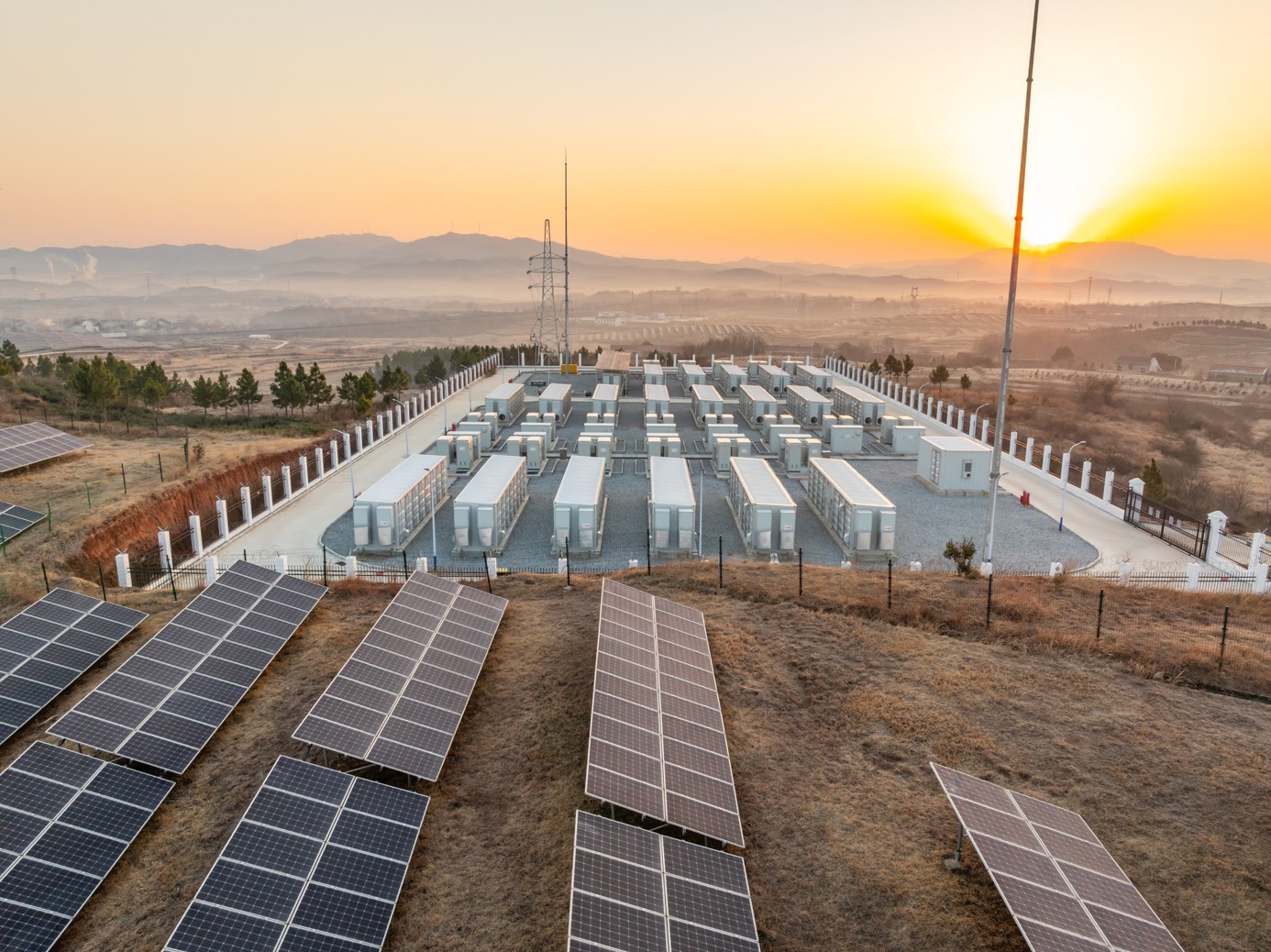
Zagreb, 16 March 2026 – In an interview for Poslovni dnevnik, Marijeta Majer, Director of Energy Projects at ENNA Next, discussed major shifts in the energy market, the growing importance of flexibility and optimisation, and highlighted that an increasing number of companies in Croatia are recognising the benefits of battery storage systems and virtual power plants. Read the full article below.
The energy market is undergoing one of its most significant transformations in recent decades. For businesses, energy is no longer merely a cost to be optimised; it is increasingly becoming a resource that can be actively managed – and even monetised. In such an environment, battery energy storage systems are rapidly transitioning from a technological innovation to a standard component of industrial and commercial energy infrastructure.
Interest among Croatian businesses in battery systems is growing significantly, driven by several factors: increasing price volatility in electricity markets, a substantial decline in technology costs, and advances in digital tools that enable precise management of energy generation, consumption and storage. At the heart of this trend lies a new business logic – energy is no longer simply consumed when available, but stored when it is inexpensive and used or sold when it is most valuable.
From Excess Energy to Market Opportunity
“Across European electricity markets, intra-day price spreads are becoming increasingly pronounced. Between 10 a.m. and 5 p.m., when solar generation peaks, prices often fall to very low or even negative levels. During the evening peak (approximately 6 p.m. to 9 p.m.), following the decline in solar output, prices frequently rise sharply. This pattern is driven by the inflexibility of solar generation, which cannot easily be reduced, while evening demand remains high, increasing volatility and highlighting the importance of flexible systems such as batteries and balancing reserves,” explains Marijeta Majer, Director of Energy Projects at ENNA Next, which contracted several battery projects in 2025.
“During sunny periods, solar generation often exceeds real-time demand, meaning surplus energy is fed into the grid at very low prices, making it uneconomical to sell at that moment. Batteries enable this excess energy to be stored and used later – either for on-site consumption when demand increases or for sale under more favourable market conditions, when electricity prices are higher,” Majer adds.
This dynamic is gradually reshaping the economics of renewable energy. According to SolarPower Europe, 2025 marked the first decline in new solar installations across the European Union since 2016. One of the reasons is the decreasing market value of solar-generated electricity. Although solar capacity in Croatia continues to grow, the market clearly indicates that projects without flexible energy management capabilities are becoming increasingly exposed to market risks.
This is precisely why battery systems are gaining a more prominent role as active market tools. In addition to optimising on-site consumption, they enable energy arbitrage – storing or purchasing electricity when prices are low and selling when prices rise – as well as participation in ancillary services for the power system.
“In this way, the system delivers a dual benefit: users can maximise the value of their own generation and increase their energy independence, while the grid benefits from a more stable and predictable flow of energy, reduced strain during peak periods, and improved price stability,” Majer concludes.
The full article is available at poslovni.hr.